Scientists Find Immune Cells Entering the Aging Human Brain
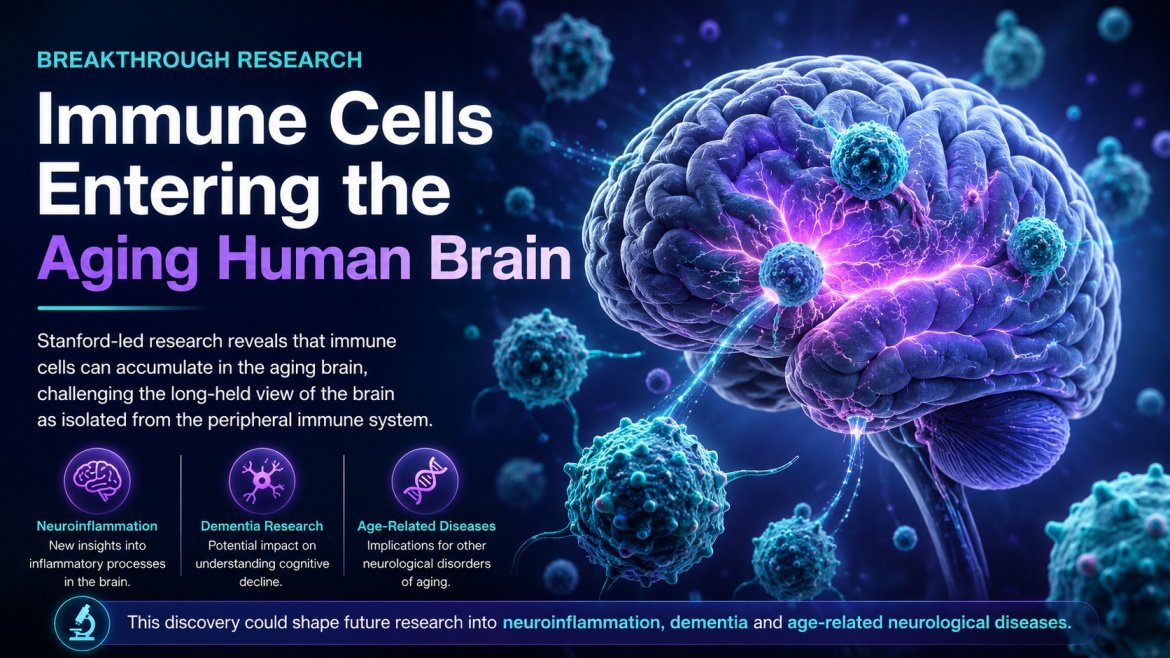
Stanford-led research suggests that immune cells can accumulate in the aging human brain, offering new insights into the relationship between immunity, brain aging and neurological disease.
A New Look at the Aging Human Brain
Scientists have reported evidence that immune cells can accumulate in the aging human brain, adding new information to our understanding of how the brain interacts with the body’s immune system during aging.
The Stanford-led research challenges the traditional picture of the brain as being highly isolated from peripheral immune activity.
🧬 What Did the Researchers Find?
The research suggests that immune cells from outside the brain may be able to enter or accumulate within the aging human brain.
This observation may help researchers better understand how interactions between the immune system and nervous system change as people grow older.
Why Is This Finding Important?
Traditional Picture
The brain has traditionally been viewed as relatively protected and isolated from many aspects of the peripheral immune system.
Emerging Picture
Evidence that immune cells can accumulate in the aging brain points toward a more complex relationship between peripheral immunity and the nervous system.
Why This Research Could Matter
Understanding immune activity in the aging brain could help guide future research into several major areas of neuroscience and age-related disease.
Why It Matters for Pharmacy and Drug Research
Discoveries about communication between the immune system and the brain can open new research directions in neuropharmacology, immunology and drug discovery.
A better understanding of immune-cell activity within aging brain tissue may help researchers investigate biological pathways and potential therapeutic targets associated with neuroinflammation and age-related neurological disorders.
However, the finding itself does not establish a new treatment. Additional research is required to determine its broader clinical and therapeutic significance.
💡 Key Takeaway
The research adds to an evolving understanding of the relationship between the aging brain and the peripheral immune system.
Evidence that immune cells can accumulate in the aging human brain could help shape future investigations into neuroinflammation, dementia, brain aging and related neurological diseases.
Science & Medical Disclaimer: This article is intended for educational and informational purposes only. Research findings should not be interpreted as medical advice, diagnosis, or evidence that a particular treatment prevents or cures dementia or other neurological diseases.